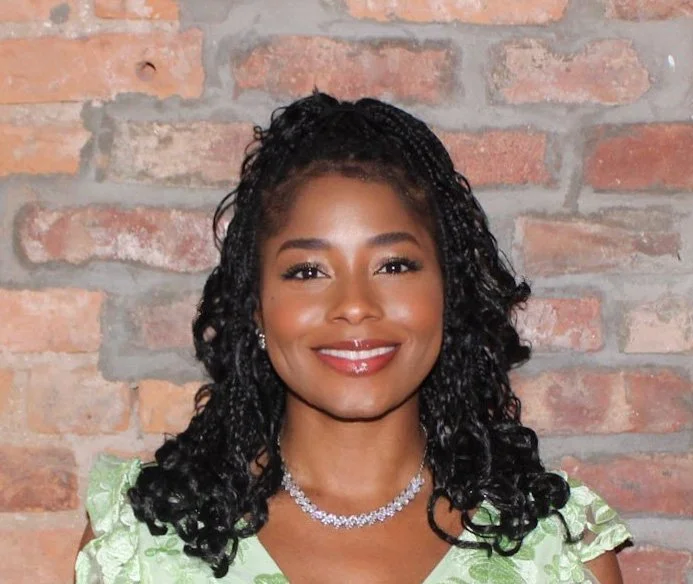
Danei Wallen
“The process matters. Not just the wins—the awards, the recognition, the tangible milestones—but everything in between. The disappointments, the heartbreaks, the difficult colleagues, the moments that feel unrelenting. All of it becomes part of the fabric of your life. ”
ArchNative, meet Danei!
Danei is an internationally licensed architect, senior project manager, and accomplished public speaker with more than a decade of experience leading complex mixed-use, healthcare, and wellness projects. In her current role, Danei is a Senior Project Manager for Group PMX. Her recent portfolio includes significant contributions to projects for Mount Sinai, NYU Langone Health, and New York City Health + Hospitals.
Outside her project work, Danei is a recognized advocate for equity in architecture and a sought-after voice in the design community. Her global perspective has earned her speaking invitations from highly regarded institutions including the United Nations, the Royal Institute of British Architects, the AIA National Conference, and the New York Building Congress. She served more than five years as Chair of AIA New York’s Diversity & Inclusion Committee and currently sits on the AIA New York State Board. She also contributes to organizations including the United Nations, the Beverly Willis Architecture Foundation, Parlour, the Stephen Lawrence Charitable Trust, and the nycobaNOMA Executive Board. She is also the founder of WALLEN + daub
Danei, since we last spoke, you’ve taken on a new role as Senior Project Manager at Group PMX. What inspired this transition, and how does your current work reflect your professional growth and past experiences?
At this point in my career, relationships are paramount. I was actually sought out for this role by someone I worked with over a decade ago—Jenny Freeman, now my boss at Group PMX. We first collaborated on an NYU oncology center adaptive reuse in Sunset Park, Brooklyn, which actually became one of New York’s premier NCI accredited cancer care facilities. At the time, Jenny represented the contractor, Hunter Roberts, and I was the architect with Francis Cauffman (now FCA Architects), and our working relationship was exceptional.
Jenny remembered not just my healthcare experience, but also my organizational and interpersonal strengths. She believed those qualities were exactly what my current client institution needed, and that’s how I came into this role.
Serving as an owner’s representative, rather than working within a design firm (which I had for over 15 years), has been a transformative shift. Before, the focus was often on preserving the design’s integrity, while managing expectations. But as an owner’s rep, you’re working directly for institutions, their C-suite, and their broader interests: financial, operational, reputational, and relational. You’re thinking holistically about what’s best for the organization through a long-term lens.
It’s opened up new professional relationships and allowed me to hone my skills in a way that feels expansive and deeply aligned with my values.
What does your day-to-day look like? What projects are you currently focused on?
Right now, I’m leading a really exciting project for a well-established institution deeply woven into New York City’s fabric and the communities it serves. We’re transforming a pre-war building within a dense and notable retail district into a space that will welcome students from across the city and beyond, while also addressing dental care, which is so critical to overall health and wellness.
The adaptive reuse aspect resonates with me, especially given our socioeconomic climate. There’s a shift away from expanding retail footprints and a renewed focus on spaces that serve a deeper purpose, spaces that give back to the community. Since healthcare has been an integral part of my career for over 12 years, this project feels like a natural extension of that commitment. I’m also pursuing my Master’s in Public Health at Yale, so I’m constantly thinking about how architecture intersects with policy and public health— particularly, how do we care for people and how do our built environments support that care?
At Group PMX, we operate with a central ethos: One Team. Shared Success. That means aligning the entire project team (this one has about 70 stakeholders involved!) around project-first thinking—making the project's success everyone’s top priority. This mentality neutralizes the various personalities, individual objectives, and politics often at play. We start by establishing the project’s mission and goals early on in the process and fostering transparency, accountability, and collaboration throughout the project’s lifecycle. It’s our secret sauce, and it’s been key to optimizing outcomes on this project.
Tell us a little bit about your involvement chairing the AIA New York Chapter Diversity & Inclusion Committee. What initiatives are really important to you and how do you implement them?
I chaired the AIA New York Chapter Diversity & Inclusion Committee for five years, and some of that time was spent co-chairing alongside incredibly talented and passionate individuals. That experience taught me a lot, especially about collaboration and how to create programming that resonates across disciplines. I always wanted our events and initiatives to be accessible, even to those outside of architecture, so that everyone could walk away with something meaningful, whether it was a new tool, a fresh perspective, or a deeper understanding.
For me, diversity is more than skin tone, gender, or country of origin. It’s about bringing together people with varied experiences and insights. That broader lens was central to our work, even before the national conversation around DEI shifted. We were intentional about fostering collaborative, fruitful conversations that crossed cultural and professional boundaries.
After my time as Chair, I served on the AIA New York State Board for several years, and I’ve continued to stay involved with AIA in different ways. These days, I’m more focused on leading from behind—creating space for new voices and faces while empowering those who are less seen or heard to step forward and take up space.I’ve also done similar work with NOMA and RIBA, and those experiences have reinforced my belief in the power of inclusive leadership. Beyond representation, it’s about creating environments where people feel valued, heard, and supported. That’s the kind of impact I strive for in both my professional work and the broader architectural community.
If someone is looking to get involved with AIA, and in particular with this committee, how do they go about it?
The committee itself is very much an open door for AIA members. If someone’s interested, it really just starts with showing up and expressing that interest.
My advice to anyone looking to get involved is to step away from your desk. Inspiration doesn’t always live in your inbox or your cubby at work. Sometimes it’s in a museum, sometimes it’s in a conversation with someone you didn’t expect to connect with. “Networking” can feel transactional, like you’re pitching yourself with an elevator speech. I want to know who people are, not just what they do. I want to know what lights them up, what they care about, and their hobbies. And I think if more of us approached collaboration that way, we’d find it easier to navigate our careers and communities.
So, if you want to get involved, be present, be yourself, and be curious. The more authentically you show up, the more meaningful your contributions will be and the more likely you are to find a space where you can thrive and help others do the same.
In 2018, you were featured in the United Nations’ Triumphs and Struggles for Freedom and Equality exhibition. How did that experience—and the personal and professional journey leading up to it—shape your global perspective and deepen your interest in international collaboration?
That moment was incredibly affirming, but it was also part of a much longer journey. I was six the first time I visited New York, from my village in Manchester, England called Chorlton-cum-Hardy, and I remember looking up at the skyline and thinking, How do those buildings even get there? That sense of awe stayed with me, and from that moment on, I knew I wanted to contribute to the built environment in a meaningful way.
Growing up, my family moved around a lot (my father worked internationally as an engineer and technician for companies like Kodak and Canon), which exposed me early to different cultures and ways of life. That experience of picking up and starting over in new places shaped how I see the world. It taught me to value adaptability, empathy, and the importance of creating spaces that support people wherever they are.
That global lens has carried through every stage of my career. I chose to study architecture in the city I fell in love with as a child. Over time, I’ve built a life and a career that’s deeply international—licensed both in England and the U.S., working with premier global design firms, and serving for five years on the executive board of the Consortium for Sustainable Urbanization (CSU), an NGO affiliated with the UN’s ECOSOC, which is committed to the responsible growth of cities via the sustainable development goals (SDGs).
Through CSU, I’ve been actively involved in advancing the UN’s Sustainable Development Goals, especially SDG #3: Good Health and Well-Being. That’s the one I’m most passionate about. Health is a universal concern—one of the few things transcending borders, politics, and privilege. Whether I’m organizing programming around climate change or attending the UN General Assembly, I see how wellness and public health are central to the future of our global cities.
What drives me is the belief that architecture isn’t just about buildings—it’s about people. It’s about how we live, how we care for one another, and how we create environments that support equity and well-being. My journey (from a small village in England to the UN and beyond) has always been about making a positive impact, and I’m committed to continuing that work through international collaboration and thoughtful design.
You were recently honored by Professional Women in Construction, New York's 20 under 40 Outstanding Women in Construction. What does this recognition mean to you? Construction is a heavily male-dominated industry- how do initiatives such as Professional Women in Construction create opportunities for women looking to join the industry or are currently working in the industry?
Being honored by Professional Women in Construction as one of New York’s 20 Under 40 Outstanding Women in Construction is deeply meaningful to me. The recognition is both a personal milestone and proof of concept. For ages, men in this industry have had visible examples, mentors, older brothers, or colleagues to look to and say, “That’s how it’s done. I can do that too.” For women, especially in construction, those examples have been fewer and farther between; recognitions like this help shift that narrative. They show that it’s not only possible: it’s happening.
Organizations like PWC play a critical role in creating visibility and community. The way the nominations are rooted in mentorship and peer recognition speaks volumes. Architecture and construction have always had an apprenticeship model, learning from the masters. But what if you learn from the madams? That’s the kind of shift we need.
I’ve tried to build on that ethos through my foundation, WALLEN+daub. We host an annual event called MadaMind during Women’s History Month, now heading into its fourth edition. It’s a panel series followed by a celebratory brunch that brings together talented women from diverse backgrounds to share their experiences, from the beautiful and the peculiar aspects of working in this industry. We talk about topics that are often left out of the conversation: different forms of parenthood, navigating health challenges, pivoting from a path. These are real experiences that shape how women move through this field.
Creating spaces where women feel seen, heard, and understood opens doors, not just for professional advancement, but belonging. And when you feel like you belong, you’re more likely to thrive, lead, and bring others along. That’s what these initiatives do. They build safety in numbers and help us rewrite what leadership in construction can look like.
What is one lesson that you have utilized throughout your career?
One of the most grounding lessons I’ve carried throughout my career came from one of my favourite mentors, Julia Murphy—now a partner at SOM. She once advised me to “suspend my disbelief” in a challenging professional moment, and honestly, it was the most leveling advice I’ve ever received.
Julia wasn’t someone who needed to say a lot to make an impact, but when she did, it stuck. I first met her through her leadership of the Beverly Willis Architecture Foundation, where I was part of one of the inaugural mentorship cohorts in 2017 for professional women in the industry. I was pregnant with my second daughter then, and that experience (being in a room full of women sharing knowledge, navigating careers, and building community while building another future woman) was formative. It was also where I met Sabrina Kanner from Brookfield Properties; years later, I worked as Project Manager at SOM on Brookfield's Manhattan West Towers and development. Full circle moments and relationships like these have been a recurring theme in my journey.
Years after that mentorship program, I was recruited for a project management role, and one of my interviewers turned out to be Julia. She remembered me and eventually became my boss. That connection and her advice have stayed with me because sometimes, you don’t know exactly where you’re headed. You keep putting one foot in front of the other, moving with intention, and trusting that the path will reveal itself in the best possible manner.
That lesson has helped me navigate moments of uncertainty, discomfort, and transition. It’s taught me that progress doesn’t always look like a straight line—and that sometimes, the places you end up are far better than anything you could have imagined. I believe that when you move with good intentions, you’ll arrive exactly where you’re meant to be.
How do you balance your advocacy work with your professional work? How do you ensure that one is supporting the other?
Balancing advocacy work with professional responsibilities isn’t always easy, but for me, it starts at home, with my daughters. I’m fortunate to live in the most amazing trifecta of support. It’s a triangle, which happens to be my favorite shape, and the number three holds special meaning for me—I’m the 333rd Black female architect in the U.S., so that symbolism runs deep.
The way we rally for each other is foundational. My youngest daughter was recently accepted into a Gifted and Talented program, and the way her sister celebrated her—unprompted, just pure joy and support—was a reminder of how we show up for one another. That same spirit carries into how I manage being a full-time student, a full-time professional (let’s be honest, a full-time-plus professional), and a full-on mom navigating co-parenting and the newness of this chapter in my life.
When I’m in class until 10 p.m. or prepping for a board presentation, one of my daughters might clean up the kitchen or assist with packing lunches. It’s not just about logistics—it’s about love, teamwork, and shared purpose. That support system helps me stay grounded in why I work so hard and gives me space to celebrate the wins, big and small.
Ultimately, it all starts at home. These two young women will one day step into a world that may not be as invested in them as I am, so I want to make sure they’re set off on the right foot. That ethos of care, advocacy, and intentionality is what I bring into my professional work. The two aren’t separate. They support and inform each other every single day.
What is one piece of advice you would give your younger self?
If I could give my younger self one piece of advice, it would be: stay the course—you’re going to get there. I used to worry so much about failure, whether I was doing enough or moving fast enough. But I’ve learned that if you’re moving incrementally and with purpose, that is enough, and you are enough.
The process matters. Not just the wins—the awards, the recognition, the tangible milestones—but everything in between. The disappointments, the heartbreaks, the difficult colleagues, the moments that feel unrelenting. All of it becomes part of the fabric of your life. And while it doesn’t always make sense when you’re in it, leaving space for gratitude in the journey itself helps you to move through the complex parts without getting stuck in them.
It’s okay to grieve the setbacks. To feel the sadness, the shame, and the frustration. But don’t stay there. Feel it, honour it, and then keep going. Because there’s something better on the horizon. As the prophetic women in my life—my mom, my sister, my grandmother, my aunts—have always said: God doesn’t take away a diamond then give you a pearl. If something is removed from your life, it’s usually to make space for something greater.
So, I’d tell my younger self: trust the process. And if not…suspend your disbelief.